Whole-Home vs. Point-of-Use Water Filter Los Angeles: Buyer Guide (2026)
LA municipal water carries chloramine, chromium-6, and 280 to 320 mg/L hardness. This guide maps each filter type to the contaminants it actually removes.
Los Angeles homeowners comparing a whole home water filtration system with a point of use filter face a decision that affects every faucet, showerhead, and appliance in the house. Whole home systems connect to the main supply line and treat every gallon before it reaches any fixture, protecting pipes and appliances from chloramines, sediment, and scale. Point of use filters treat water at a single outlet and are built to reduce health effect contaminants such as chromium-6, lead, nitrates, and PFAS to very low concentrations. Los Angeles water, supplied by the Los Angeles Department of Water and Power, uses chloramine as its primary disinfectant and records total trihalomethane levels of 20 to 40 parts per billion alongside hardness of 280 to 320 milligrams per liter (LADWP 2024 Water Quality Report, ladwp.com). This guide maps each system's strengths to your contaminant concerns, explains the NSF/ANSI certification matrix, covers the California C-55 license requirement, and helps you choose the right solution for your LA home.
What is the difference between a whole home water filter and a point of use filter?
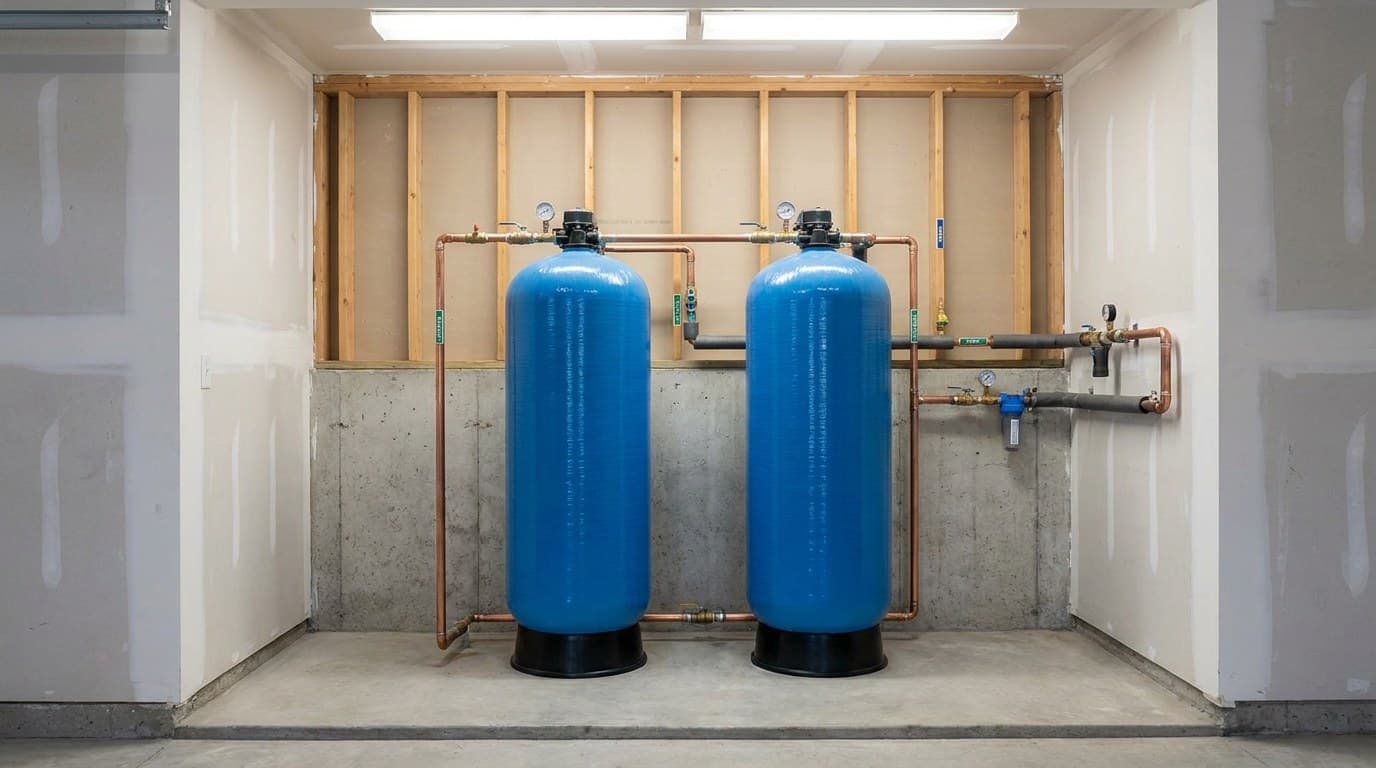
A whole home water filter, also called a whole house system or point of entry filter, installs on the main water line where supply enters the building. Every fixture in the home including showers, bathtubs, toilets, dishwashers, washing machines, and garden hoses receives treated water. The primary function of most whole home systems is to remove sediment, reduce chlorine and chloramine odor, and protect appliances from mineral scale buildup. Many whole home configurations combine a sediment pre-filter with an activated carbon stage and, in areas with high water hardness like Los Angeles, a salt-based softening tank.
A point of use filter treats water at the moment of consumption, typically at the kitchen sink or a refrigerator line. Under-sink reverse osmosis systems are the most capable point of use technology available, removing dissolved solids, heavy metals, PFAS compounds, nitrates, and other health effect contaminants to extremely low levels. Countertop carbon filters and refrigerator filters improve taste and odor but offer narrower contaminant coverage.
The fundamental trade-off is scope versus depth. A whole home system protects the entire plumbing network from a broad set of contaminants but rarely achieves the contaminant-removal performance of a dedicated reverse osmosis membrane. A reverse osmosis system delivers highly purified water at one tap but leaves the rest of the home's plumbing and appliances exposed to unfiltered municipal supply.
For Los Angeles households contending with chloramine disinfection, hard water, and chromium-6 concerns, most water quality professionals recommend combining both approaches rather than choosing one over the other.
What contaminants does Los Angeles tap water actually contain?
The Los Angeles Department of Water and Power publishes an annual Water Quality Report covering the contaminants detected across its distribution system. Key findings relevant to filter selection (LADWP 2024 Water Quality Report, ladwp.com):
Chloramine
LADWP uses chloramine, a combination of chlorine and ammonia, rather than free chlorine as its primary residual disinfectant. Chloramine is more stable over long distribution distances but is harder to remove than free chlorine. Standard activated carbon blocks are less effective against chloramine than against free chlorine. Catalytic carbon media or reverse osmosis is required for reliable removal.
Total trihalomethanes (TTHMs)
LADWP records TTHMs at approximately 20 to 40 parts per billion. The federal maximum contaminant level is 80 ppb (U.S. Environmental Protection Agency, epa.gov/dwstandardsregulations). TTHMs form when disinfectants react with organic matter in source water and are classified as potential carcinogens with long-term exposure.
Water hardness
LA tap water carries hardness of approximately 280 to 320 milligrams per liter, or roughly 16 to 19 grains per gallon. This is classified as very hard and causes scale buildup on fixtures, reduced appliance efficiency, and dry skin and hair.
Chromium-6
California's Office of Environmental Health Hazard Assessment has set a public health goal of 0.02 parts per billion for hexavalent chromium, also known as chromium-6 (California OEHHA, oehha.ca.gov). Chromium-6 occurs naturally in Southern California groundwater supplies blended into LADWP's distribution system, particularly in sources drawing from the San Gabriel Valley. Reverse osmosis certified under NSF/ANSI 58 is the most effective residential technology for reducing chromium-6 at the point of drinking.
Fluoride
LADWP adds fluoride at approximately 0.7 mg/L per state and federal guidelines. Some households choose point of use reverse osmosis for fluoride reduction at the kitchen tap.
Which NSF/ANSI certification matters for each filter type?
NSF International operates an independent certification program for water treatment devices. Three standards govern most residential filtration products (NSF International, nsf.org). Understanding what each standard covers and what it explicitly does not cover is essential before making a purchase decision.
| Standard | Scope | Covers | Does NOT cover | Best for |
|---|---|---|---|---|
| NSF/ANSI 42 | Aesthetic effects | Taste, odor, chlorine reduction | Health-effect contaminants, heavy metals, PFAS, chromium-6 | Pitcher filters, faucet mounts, sediment pre-filters |
| NSF/ANSI 53 | Health effects | Lead, cysts, certain disinfection byproducts | PFAS, chromium-6, nitrates (unless product specifically claims and tests for them) | Whole home carbon systems, under-sink carbon blocks |
| NSF/ANSI 58 | Reverse osmosis systems | TDS, nitrates, heavy metals including chromium, barium, radium, PFAS | Whole-home scale (RO is point-of-use by design) | Under-sink RO systems for drinking and cooking water |
Source: NSF International certified product definitions, nsf.org
Southern California Water Treatment holds NSF/ANSI 42, 53, and 58 certifications across its product line, ensuring each system is independently verified for the specific contaminants it claims to reduce. Always use the NSF certified product search at nsf.org to confirm that certification claims apply to the contaminants of concern in your area, not just the standard number on the label.
What does the installation process involve for a whole home system in Los Angeles?
Installing a whole home water filtration system in Los Angeles typically involves four phases: site assessment, equipment selection, mechanical installation, and commissioning.
Site assessment: A technician evaluates the main water service entry point, existing plumbing material and condition, water pressure (typically 60 to 80 psi in LA municipal service), and available space for filter tanks. Homes built before 1986 may have lead solder in copper joints, which can affect contaminant priorities and the recommended system configuration.
Equipment selection: The system configuration is matched to the home's contaminant profile and household priorities. A standard package for an LA single-family home typically includes a sediment pre-filter (5 to 10 micron), a catalytic carbon filter for chloramine reduction, and a salt-based softening tank for hardness. Some configurations add a UV disinfection stage for added pathogen protection.
Mechanical installation: The crew cuts into the main supply line after the water meter, installs the filter assembly in parallel with a bypass valve, connects drain lines for the softener brine tank, and programs the regeneration schedule. Bypass valves allow uninterrupted water service during future filter changes and maintenance visits.
Commissioning: After installation, the system is flushed, pressure-tested, and flow rates are verified. Homeowners receive an orientation covering filter replacement schedules, brine replenishment intervals, and what to monitor in system performance over time.
Southern California Water Treatment has completed more than 5,000 installs across Los Angeles, Orange County, San Diego, Riverside, San Bernardino, and Ventura counties since 2009, with 94 percent of installations completed in a single visit.
Under-sink vs. countertop vs. pitcher: which point of use option removes the most contaminants?
Point of use filters span a wide performance range. Understanding the technology behind each format sets accurate expectations before purchase.
Under-sink reverse osmosis: An RO system forces water through a semi-permeable membrane with pores small enough to reject dissolved solids, heavy metals, PFAS compounds, chromium-6, nitrates, fluoride, and most other contaminants. A five-stage system certified under NSF/ANSI 58 is the most capable residential point of use technology available. The system produces purified water slowly and stores it in a pressurized tank under the sink, delivering it through a dedicated faucet on demand.
Countertop carbon filters: A solid block carbon filter improves taste, reduces free chlorine, and addresses a narrower list of contaminants than reverse osmosis. Most countertop units hold NSF/ANSI 42 certification for taste and odor, and some carry NSF/ANSI 53 for specific health effect contaminants. Countertop filters do not remove dissolved solids, heavy metals, PFAS, chromium-6, or nitrates.
Pitcher filters: The most widely used category, pitchers with activated carbon media are effective for taste and odor improvement and certified under NSF/ANSI 42. Lead reduction performance varies widely by model and only specific cartridges tested under NSF/ANSI 53 carry that claim. Pitcher filters are not effective against PFAS, chromium-6, nitrates, or dissolved solids.
For Los Angeles households concerned about chromium-6, PFAS, or the elevated TDS profile of LA municipal water, only an NSF/ANSI 58-certified reverse osmosis system provides meaningful reduction across all of those contaminants at the point of drinking and cooking.
| Filter type | Primary target | Chromium-6 | PFAS | Fluoride | Certifications |
|---|---|---|---|---|---|
| Whole home carbon + softener | Chloramine, scale, sediment | NSF/ANSI 42, 53 | |||
| Under-sink reverse osmosis | TDS, chromium-6, nitrates, PFAS, lead, fluoride | NSF/ANSI 58 | |||
| Countertop carbon filter | Taste, odor, free chlorine | NSF/ANSI 42 | |||
| Pitcher filter | Taste, odor | NSF/ANSI 42 (lead varies by model) |
Source: NSF International certified product scope, nsf.org
Do you need a licensed contractor to install a whole home water filter in California?
Yes. For any system connected to the home's plumbing beyond a simple faucet mount or pitcher placement, California law requires that the work be performed by a contractor holding a valid C-55 (Water Conditioning Equipment) license issued by the California Contractors State License Board (CSLB, cslb.ca.gov).
The C-55 license covers the installation, service, and repair of water softening and conditioning equipment. It requires passing an examination, demonstrating verifiable field experience, and posting a contractor's bond. Unlicensed installation of water conditioning equipment is a misdemeanor under California Business and Professions Code Section 7028.
Why does this matter to homeowners? An unlicensed installation can void a homeowner's insurance claim if a leak from the filtration system causes property damage. It can also create disclosure obligations when selling the home, as unpermitted plumbing work is a required material fact disclosure in California real estate transactions. Some manufacturers also condition their equipment warranty on installation by a licensed contractor.
Southern California Water Treatment holds California C-55 license number 1085921. Every installation the company performs is covered under the licensed contractor requirement. Homeowners can verify any contractor's license status, bond, and insurance at the CSLB license check tool at cslb.ca.gov before signing a contract.
Before accepting any installation quote, ask the provider for their CSLB license number and the exact name listed on the license. A legitimate C-55 contractor will provide this information without hesitation.
Can a whole home filter and point of use system work together?
Yes, and for most Los Angeles households they work better together than either does alone. The systems target different problems and operate at different stages of the home's plumbing.
A whole home system placed at the main entry line addresses the bulk of the water that flows through the house: the water filling the water heater, running through the washing machine, flowing from every showerhead, and reaching every hose bib. Removing sediment, chloramine, and mineral hardness at this stage protects plumbing, extends appliance life, and improves conditions throughout the home.
An under-sink reverse osmosis system at the kitchen sink then takes that pre-treated water and refines it further to drinking-quality purity. When the whole home system has already removed chloramine and reduced hardness, the RO membrane operates more efficiently and lasts longer because it is not processing raw municipal supply.
The combination is particularly well suited to LA's water profile. The whole home carbon and softener stage handles the chloramine and the 280 to 320 mg/L hardness. The RO system handles the chromium-6, fluoride, and any residual PFAS that carbon alone does not address. The result is scale-free pipes, protected appliances, and purified drinking water at the tap.
Southern California Water Treatment has maintained a 98 percent customer satisfaction rate, backed by a 90-day money-back guarantee and a 5-year warranty on tanks, valves, and labor.
How do I choose the right filter for my specific LA neighborhood?
Los Angeles draws water from multiple sources: Northern California surface water via the State Water Project, Colorado River supply via the Metropolitan Water District, and local groundwater basins. The blend varies by service area and season, which means contaminant profiles differ meaningfully across the county.
San Gabriel Valley (Pasadena, Arcadia, El Monte, Alhambra): These communities have historically recorded elevated chromium-6 levels due to industrial era groundwater contamination in the San Gabriel Basin. An under-sink RO system certified under NSF/ANSI 58 for chromium reduction is the most targeted response. Pair it with a whole home catalytic carbon system to address chloramine from the MWD surface supply blend.
Coastal areas (Santa Monica, Venice, Playa del Rey, Manhattan Beach): These communities are served primarily by Metropolitan Water District surface supply and tend to see more variation in chloramine concentration and TTHM levels. A whole home catalytic carbon system is the most targeted solution for pipe protection and appliance health, with an RO unit at the kitchen tap for drinking water purity.
San Fernando Valley and inland communities: These areas often contend with higher total dissolved solids and hardness from groundwater blends. A whole home water softener paired with an RO unit at the kitchen tap is the most practical combination for scale control and purified drinking water.
The most reliable starting point is a free in-home water test pulling from your specific tap and evaluating the actual water your household uses. Southern California Water Treatment provides complimentary water testing with a written results report before any purchase decision is made. After the test, review your utility's most recent Consumer Confidence Report, available from LADWP at ladwp.com, to see what contaminants have been detected in your specific distribution zone.
5,000+ installs since 2009
Whole home and point of use systems across Southern California
CA C-55 License #1085921
All installations performed by CSLB-licensed water conditioning contractors
90-day money-back guarantee
NSF/ANSI 42, 53, and 58 certified systems with 5-year warranty
Common questions
- What is the difference between NSF/ANSI 42 and NSF/ANSI 53 certification?
- NSF/ANSI 42 certifies filters for aesthetic effects: taste, odor, and free chlorine reduction. NSF/ANSI 53 certifies for health-effect contaminants including lead, cysts, and specific disinfection byproducts. A filter can carry both certifications. When purchasing for health protection rather than taste, verify the filter holds NSF/ANSI 53 certification for the specific contaminant at issue using the certified product database at nsf.org, not the packaging alone.
- Does a whole home water filter remove chloramine from Los Angeles water?
- Standard activated carbon block does not effectively remove chloramine. Catalytic carbon media, engineered for a different reaction mechanism, is required to break down chloramine in LADWP-supplied water. When specifying a whole home system for Los Angeles, confirm the filter media is catalytic carbon and that the manufacturer's rated flow matches your home's peak demand, typically 8 to 12 gallons per minute for a three-bedroom home.
- Is a C-55 license required to install a whole home water filter in California?
- Yes. The California Contractors State License Board requires a C-55 (Water Conditioning Equipment) license for the installation of any water softening or conditioning equipment connected to home plumbing. Unlicensed installation is a misdemeanor under California Business and Professions Code Section 7028 and can void homeowner's insurance for related water damage. Verify a contractor's C-55 license number through the CSLB license lookup at cslb.ca.gov before signing any contract.
- Can a reverse osmosis system remove chromium-6 from Los Angeles water?
- Yes. Reverse osmosis systems certified under NSF/ANSI 58 achieve greater than 95 percent reduction of hexavalent chromium at the point of use. California's Office of Environmental Health Hazard Assessment has set a public health goal of 0.02 parts per billion for chromium-6 (oehha.ca.gov), far below the federal MCL. An under-sink RO system is the most practical residential technology for chromium-6 reduction, particularly in San Gabriel Valley communities with historically elevated groundwater levels.
- How long does a whole home water filter installation take in Los Angeles?
- Most whole home filtration installations in a single-family home take one day. The crew installs the filter assembly at the main supply line, connects drain lines for the softener system, flushes and pressure-tests the assembly, and completes a homeowner walkthrough covering filter replacement schedules and brine replenishment. Southern California Water Treatment completes 94 percent of installations in a single visit, typically within the same week as the initial water test.
- Do I need a water softener if I already have a whole home carbon filter?
- A water softener and a whole home carbon filter address different problems and work well together. The softener exchanges calcium and magnesium ions for sodium, preventing scale on fixtures and appliances throughout the home. The carbon filter removes sediment, chloramine, and organic compounds. Adding an under-sink reverse osmosis system downstream removes the sodium introduced by the softener along with chromium-6, PFAS, nitrates, and fluoride at the kitchen tap.
Sources
- Los Angeles Department of Water and Power, 2024 Water Quality Report. ladwp.com ↗
- NSF International, NSF/ANSI Standard 42, 53, and 58 scope definitions. nsf.org ↗
- California Office of Environmental Health Hazard Assessment, chromium-6 public health goal (0.02 ppb). oehha.ca.gov ↗
- U.S. Environmental Protection Agency, Drinking Water Standards and Health Advisories. epa.gov/dwstandardsregulations ↗
- California Contractors State License Board, C-55 Water Conditioning Equipment license requirements. cslb.ca.gov ↗
Find out exactly what is in your LA tap water. Free water test. Lab results in 24 hours. No obligation.
A SoCal Water Treatment technician runs a field test at your kitchen sink and sends a sample to an independent California ELAP-certified lab. You see the chromium-6, hardness, TDS, and chloramine results from your specific tap before any system is discussed.
- Free water test in your kitchen. Nothing charged until you see the lab numbers.
- Three system options, all-in number, four financing terms shown side-by-side.
- 5-year comprehensive warranty. 90-day money-back guarantee.
- Same-day install in most ZIPs. Permits pulled by us.
Cleaner water at every tap by sundown. No upsell theater.
Free water test in your kitchen. Lab report in 24 hours. 5-year warranty. 90-day money-back.