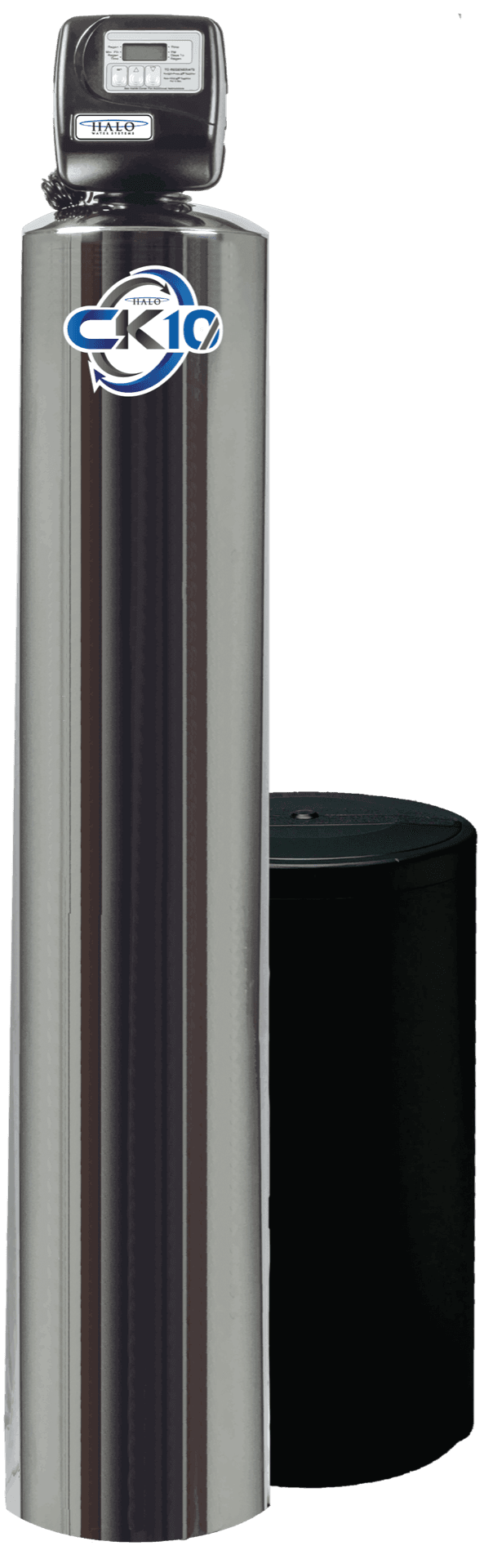
Commercial water softener and reverse osmosis installation in Los Angeles.
LA County tap water tests at 18 to 24 grains per gallon of hardness. This guide covers how commercial systems are sized, permitted, and installed for Los Angeles businesses under NSF/ANSI 44 and 58 standards.
Los Angeles County tap water delivered by LADWP and Metropolitan Water District retailers consistently tests at 18 to 24 grains per gallon (308 to 410 milligrams per liter) of hardness, depending on the seasonal blend of Eastern Sierra aqueduct water and local groundwater. For commercial operations running dishwashers, espresso machines, steam equipment, cooling towers, or water-intensive manufacturing processes, that hardness level causes accelerated scale, equipment failure, and elevated energy costs at a rate that compounds with hours of daily use. Commercial water softeners sized for SoCal hardness use NSF/ANSI 44-certified ion exchange resin to remove calcium and magnesium before water reaches your equipment. Commercial reverse osmosis systems, certified under NSF/ANSI 58, go further: they reduce total dissolved solids by 90 to 99 percent and stabilize the water chemistry that food and beverage operations, healthcare facilities, and laboratory environments require. This guide covers how commercial systems are sized, permitted, installed, and maintained in Los Angeles County.
What is the water hardness in Los Angeles and why does it matter for businesses?
Water hardness is the concentration of dissolved calcium and magnesium in a water supply, expressed in grains per gallon (gpg) or milligrams per liter (mg/L) of calcium carbonate equivalent. LA County's tap water sits in the very hard range: 18 to 24 gpg depending on which distribution zone and water blend your address draws from. For context, the U.S. Geological Survey classifies water above 10.5 gpg as hard and above 14 gpg as very hard. LA consistently exceeds both thresholds.
The hardness comes from the geology of the source water. Colorado River water, which makes up a significant share of the Metropolitan Water District blend, travels through calcium-rich rock formations before delivery. Eastern Sierra water via the LA Aqueduct tends to be softer, but blending ratios shift seasonally. The result is water chemistry that rarely drops below 15 gpg at the tap for most LA commercial addresses. Current hardness readings for your distribution zone are available in LADWP's annual Consumer Confidence Report at ladwp.com/water/water-quality.
| Classification | Grains/gallon | mg/L as CaCO3 | Commercial impact |
|---|---|---|---|
| Soft water | 0 to 3.5 gpg | 0 to 60 mg/L | No scale buildup; can accelerate corrosion in some metals |
| Slightly hard | 3.5 to 7 gpg | 61 to 120 mg/L | Minor spotting on equipment |
| Moderately hard | 7 to 10.5 gpg | 121 to 180 mg/L | Visible scale in high-temperature applications |
| Hard water | 10.5 to 14 gpg | 181 to 240 mg/L | Accelerated scale on heating elements, boilers |
| Very hard (typical LA) | 14 to 25+ gpg | 240 to 428+ mg/L | Significant daily scale buildup; measurable equipment degradation |
The EPA does not set a federal maximum contaminant level for hardness because it is not considered a direct health risk. However, the EPA's secondary drinking water standards at epa.gov/dwstandardsregulations do establish a secondary maximum contaminant level of 500 mg/L for total dissolved solids (TDS), citing aesthetic and equipment-related concerns. LA water at 308 to 410 mg/L of hardness alone is already well within TDS ranges where scale begins to affect equipment performance and operating costs for high-use commercial applications.
For commercial operators, scale deposits from hard water are a maintenance budget problem: heating elements encrusted with calcium carbonate require more energy to reach the same temperature, scale on boiler surfaces accelerates corrosion, and clogged spray arms in commercial dishwashers require frequent descaling cycles that interrupt service. A commercial water softener at the point of entry resolves the root cause upstream of all downstream equipment. See our water softener installation service page for residential and commercial options, or use the water quality checker to see hardness data for your ZIP code.
How does a commercial water softener work?
Commercial water softeners use the same ion exchange chemistry as residential units, scaled to match higher flow rates and larger daily water volumes. The core of the system is a resin tank filled with thousands of tiny polystyrene beads charged with sodium ions. As hard water flows through the tank, calcium and magnesium ions in the water are attracted to the charged resin beads and exchange places with sodium ions. The water leaving the softener has the same volume and pressure but with calcium and magnesium replaced by sodium, which does not form scale deposits.
Over time the resin beads become saturated with calcium and magnesium and need to be regenerated. During regeneration, a concentrated brine solution (sodium chloride in water) is flushed through the resin, displacing the accumulated hardness ions and flushing them down the drain. The resin is then rinsed and ready to soften again. This cycle repeats on a schedule tied either to elapsed time or to actual water volume treated, measured by a flow meter. Demand-initiated regeneration, which triggers based on actual water usage rather than a fixed timer, is now the standard approach in commercial installations because it reduces salt and water consumption and avoids unnecessary regeneration cycles during slow periods.
Commercial water softeners evaluated for performance are tested under NSF/ANSI Standard 44, which covers cation exchange water softeners. NSF 44 verification includes salt efficiency ratings (grains of hardness removed per pound of salt used), pressure drop ratings, and material safety requirements. The full standard is referenced at nsf.org. Look for NSF 44 listed on the product specification sheet when evaluating commercial softener options for an LA commercial installation.
Source: NSF International NSF/ANSI 44 Cation Exchange Water Softeners Standard
Commercial softeners differ from residential units in several important ways: they use larger resin tanks (often multiple tanks in parallel or series), higher-capacity control valves rated for 15 to 150+ gallons per minute, and dual-tank or triplex configurations that allow one tank to regenerate while another remains in service so softened water is always available without interruption. That continuous availability matters for commercial kitchens, hotel laundry operations, and any business that cannot tolerate a 90-minute regeneration gap in water quality.
What size commercial water softener does a Los Angeles business need?
Sizing a commercial softener for LA hardness requires two inputs: the facility's daily water consumption in gallons per day (GPD) and the hardness of the incoming supply in grains per gallon. Multiplying these two numbers gives the daily hardness load in grains that the softener must remove between regenerations.
Example: a 60-seat restaurant in Burbank uses approximately 1,000 gallons of hot water per day for kitchen equipment and dishwashing. At an average hardness of 20 gpg for that distribution zone, the daily hardness load is 20,000 grains. A commercial softener with a 100,000-grain resin capacity would handle five days of water use before regeneration is needed, comfortably within the recommended regeneration frequency of every 3 to 10 days for commercial systems. A hotel running 50,000 gallons per day at the same hardness level has a daily hardness load of 1,000,000 grains and would need multiple large-capacity softener tanks in parallel service.
Flow rate is the second constraint. A commercial softener must be able to supply softened water at the peak instantaneous demand of the facility without pressure drop or bypass of unsoftened water. For a restaurant, peak demand during a service rush might be 15 to 25 gallons per minute. A hotel with multiple laundry machines running simultaneously might need 50 to 100 GPM of sustained softened water flow. The control valve and distribution header must be sized to meet peak flow without creating a pressure drop that affects kitchen or laundry equipment performance.
A qualified installer will pull your water utility bill to estimate average daily consumption, conduct an in-person flow rate test at peak demand times if needed, and pull hardness data from the relevant LADWP or municipal utility Consumer Confidence Report to verify current hardness before specifying the system. See our Los Angeles County service area page for additional zone-specific water data.
When should a Los Angeles business choose commercial reverse osmosis?
Reverse osmosis pushes water through a semipermeable membrane under pressure, separating the water molecules from dissolved salts, minerals, nitrates, chlorides, and most ionic contaminants. A commercial RO system certified under NSF/ANSI 58 typically reduces TDS by 90 to 99 percent and reduces hardness to near zero at the product water outlet. The membrane does not distinguish between problematic hardness minerals and beneficial minerals, so RO water is low in all dissolved substances.
Commercial RO is appropriate when the application requires more than hardness removal. Industries that commonly install commercial RO in Los Angeles include:
- Food and beverage production. Craft breweries, coffee roasters, kombucha producers, and bottled water operations need consistent, defined water chemistry as an ingredient. RO strips the incoming water to a blank slate that blending stations can then build back to a target mineral profile. A softener alone would not achieve the TDS reduction required.
- Healthcare and dental facilities. Dental chair unit water lines, autoclave sterilizers, and some diagnostic laboratory instruments require water that meets specific purity standards. High-TDS water causes mineral deposits inside autoclave chambers and on sterilized instruments; most manufacturers specify water below 10 mg/L TDS for autoclave feed. RO is typically the entry-level treatment required for these applications in SoCal.
- Commercial car washes. The spot-free rinse arch at the end of a tunnel car wash runs on RO water to prevent mineral spots on painted surfaces and glass as the vehicle dries. LA water at 18 to 24 gpg leaves visible water spots if not treated before the final rinse. High-capacity RO systems for tunnel car washes are sized in thousands of gallons per day and typically include a recovery rate optimization to minimize reject water discharge.
- Commercial laundry and linen services. Hotel and hospital laundry operations can reduce detergent and chemical usage significantly by treating wash water with a softener, and in some cases a partial RO treatment for the final rinse cycle. Softening reduces the hardness ions that interfere with surfactant performance; RO on rinse water eliminates the need for anti-redeposition agents.
RO systems generate a reject stream (concentrate) that contains the removed minerals, typically at a concentration 3 to 4 times higher than the feedwater. This reject stream must be discharged to drain and accounts for 20 to 40 percent of the feedwater volume in a commercial RO system operating at standard recovery rates. In drought-sensitive Southern California, high-efficiency RO systems with enhanced recovery designs (75 to 85 percent recovery) reduce water waste and lower operating costs. The Los Angeles County Sanitation Districts' industrial waste discharge requirements apply to businesses discharging RO concentrate above certain TDS thresholds. Verify applicable limits with the relevant wastewater agency before system selection.
Learn more about reverse osmosis installation services and combination softener and filtration systems. For operations where both softening and RO are needed, a softener pre-treating the RO feedwater extends membrane service life significantly by preventing hardness scaling on the membrane surface, which is one of the leading causes of premature membrane replacement in LA installations.
How are commercial water treatment systems permitted in California?
California requires a licensed C-36 Plumbing contractor to pull permits for any commercial water treatment installation involving new plumbing connections, backflow prevention devices, or drain tie-ins. The permit application goes to the local building and safety department, which for unincorporated LA County is the Los Angeles County Department of Public Works. For businesses within incorporated cities (Los Angeles, Burbank, Pasadena, Long Beach, and others), the applicable department is that city's own building department.
Backflow prevention is a consistent requirement. A water softener or RO system connected to the potable water supply must include an approved backflow prevention assembly to protect the public water system from contamination. The specific assembly type (reduced pressure zone device, double check valve, or pressure vacuum breaker) depends on the degree of hazard at the facility, and the device must be tested annually by a certified backflow prevention assembly tester per California Health and Safety Code Section 116800 and the local water utility's cross-connection control program. LADWP's cross-connection control requirements are published at ladwp.com.
Salt-based water softener regeneration discharge is regulated by local wastewater agencies under pretreatment standards. Some agencies in SoCal impose limits on the salinity of commercial softener discharge or require discharge volume reporting. The Los Angeles County Sanitation Districts publish their industrial waste acceptance criteria at lacsd.org. Operators considering high-volume commercial softeners should verify discharge requirements before purchase.
California also has additional water softener regulations under state law: water softeners that use more than 4 pounds of salt per 1,000 grains of hardness removed are prohibited under state efficiency standards designed to protect groundwater quality from excessive salt discharge. The state efficiency standard, enforced by the State Water Resources Control Board, effectively requires demand-initiated regeneration control for commercial systems in California. Details are at waterboards.ca.gov/drinking_water.
Which industries in Los Angeles benefit most from commercial water treatment?
Hard water affects any business that heats water, uses water as an ingredient, or relies on equipment with narrow water quality tolerances. In LA's commercial landscape, the industries where ROI on commercial water treatment is most clearly documented include:
Restaurants and commercial kitchens.
Steam ovens, dishwashers, ice machines, and espresso equipment are all adversely affected by hard water. Heating element replacement and descaling service calls are documented as the primary maintenance cost driven by untreated hard water in commercial kitchen equipment. A softener at the point of entry protects all kitchen equipment simultaneously and reduces the use of chemical descaling products. See Los Angeles County water treatment for service area coverage.
Hotels and hospitality.
Laundry facilities, kitchen operations, pools, and cooling towers in LA hotels all carry water treatment systems as standard infrastructure. Cooling towers operating on hard water form scale deposits that reduce thermal efficiency and can harbor Legionella under certain conditions. A water treatment program for cooling towers typically combines scale inhibition and softening upstream of the tower to control cycles of concentration.
Car washes and automotive detailing.
Spot-free rinse water is the primary commercial RO application for automotive service businesses in LA. A tunnel car wash processing 200 to 400 vehicles per day may run 5,000 to 15,000 gallons of RO water through the spot-free rinse arch daily. Softeners are also used upstream of wash water in tunnel systems to reduce detergent usage and improve foam performance.
Craft beverages and food manufacturing.
LA's growing craft brewery and specialty coffee sectors require water chemistry control as a core production variable. Most craft breweries use RO or deionization as the starting point for their process water, then build mineral profiles to match brewing targets. Coffee equipment manufacturers specify water chemistry ranges for commercial espresso machines, typically 50 to 175 mg/L TDS with hardness below 8 gpg, which usually requires treatment of LA tap water before use.
Our service area covers all major LA County commercial districts including Los Angeles, Orange County, Riverside County, and San Bernardino County. Use the water quality checker to pull hardness data for a specific ZIP code before requesting a sizing quote.
How often does commercial water treatment equipment need service in Los Angeles?
Commercial water softeners are low-maintenance systems by design but do require periodic attention that residential softeners typically do not. The main ongoing requirements for a commercial ion exchange softener in an LA installation are:
- 01.Salt replenishment. Sodium chloride or potassium chloride salt must be maintained in the brine tank at a level sufficient to produce a full brine concentration for each regeneration cycle. Frequency depends on daily regeneration volume; larger systems may require weekly or bi-weekly salt delivery by a service provider.
- 02.Resin inspection and occasional replacement. Ion exchange resin has a service life of 10 to 20 years under normal operating conditions. Exposure to chlorine above 0.5 mg/L (typical in LA tap water), iron fouling, or bacterial contamination can degrade resin prematurely. Annual resin quality testing by a water treatment specialist is recommended for commercial installations.
- 03.Control valve and brine injector service. The control valve is the mechanical heart of the softener. On commercial systems processing high daily volumes, internal seals and the brine injector assembly should be inspected annually. Manufacturers typically publish service interval guidance in the installation manual for the specific control valve model.
- 04.Backflow preventer annual testing.California regulations require annual testing of approved backflow prevention assemblies by a certified tester. This is a separate requirement from softener service and must be documented for the water utility's cross-connection control program. Failure to test and certify the backflow preventer can result in utility notice of violation and, in some jurisdictions, water service termination.
Commercial RO systems have additional maintenance requirements: membrane replacement typically every 2 to 5 years depending on feedwater quality and recovery rate, pre-filter cartridge replacement every 3 to 6 months, and annual pressure testing of the membrane housing and high-pressure pump. If the softener pre-treating the RO feedwater fails to regenerate properly, hardness scaling on the RO membrane can occur within days in an LA hard water environment, dramatically shortening membrane life. Monitoring the product water TDS with an in-line meter is the standard way to detect membrane performance decline before it causes product quality problems.
For water treatment warranty coverage details, see our warranty page. Our service area spans Los Angeles County, Ventura County, and San Diego County. Visit our water treatment FAQ page for additional questions about commercial and residential systems, or check our PFAS guide for SoCal and chromium-6 guide for the San Gabriel Valley to understand other contaminant concerns that affect LA businesses.
Related guides and services
- →PFAS in Southern California drinking water
- →Chromium-6 in the San Gabriel Valley
- →Water softener installation
- →Reverse osmosis installation
- →Whole-home water filtration
- →Softener and filtration combo systems
- →Los Angeles County water treatment
- →Orange County water treatment
- →Riverside County water treatment
- →Check your water quality by ZIP code
- →Water treatment frequently asked questions
Get your LA facility sized correctly. No guesswork. No overselling.
A licensed technician tests your hardness on-site, calculates your daily load, and specs a commercial softener or RO system to match your actual water demand. Contact us to schedule an assessment.
- Free water test in your kitchen. Nothing charged until you see the lab numbers.
- Three system options, all-in number, four financing terms shown side-by-side.
- 5-year comprehensive warranty. 90-day money-back guarantee.
- Same-day install in most ZIPs. Permits pulled by us.
Schedule a commercial site assessment
Pick a window for your free water test.
A SoCal Water Treatment tech meets you in your kitchen, runs the test, sends the lab sample. No charge, no commitment.
Request your free water test and we will confirm a window with you directly, usually within the hour.
Cleaner water at every tap by sundown. No upsell theater.
Free water test in your kitchen. Lab report in 24 hours. 5-year warranty. 90-day money-back.